
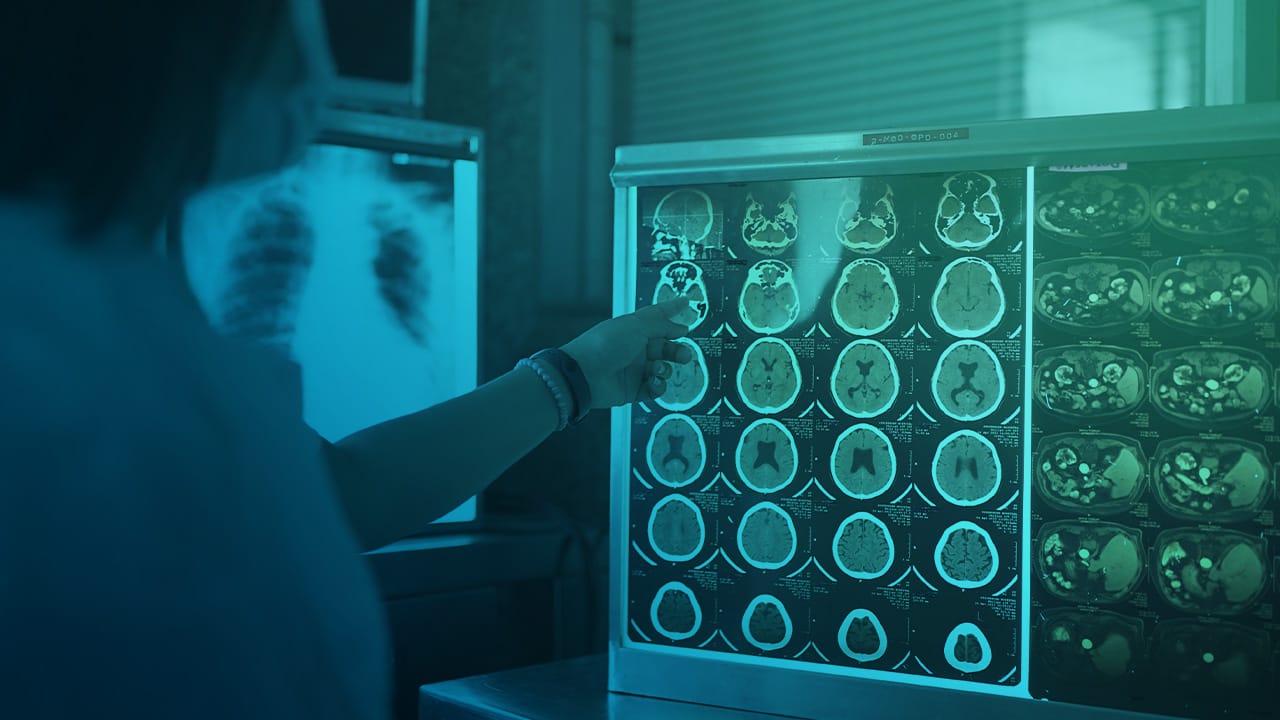
Rethinking radiology in the age of AI
Written by: Timur Zaimovic , Chief Business Officer
Artificial intelligence is already reshaping radiology. From my perspective, the pace of change is faster than most healthcare systems are prepared for, and much of it is happening quietly, inside everyday clinical workflows.
What we are witnessing is not a gradual improvement. It is a structural shift in how medical imaging contributes to diagnosis and patient care. AI is moving beyond a supporting role. It is beginning to influence how screening programs are designed, how radiologists prioritize cases, and how early detection is achieved.

The real opportunity
In practical terms, AI can already interpret X-ray, CT, and mammography exams with high clinical accuracy. Its value is particularly evident in detecting diseases where timing is critical, such as lung cancer, tuberculosis, and breast cancer. At the same time, it addresses a long-standing reality in radiology. Even the most experienced professionals work under pressure, and factors such as fatigue and search bias can lead to missed findings, especially when lesions are small or not easily visible.
This is where AI creates tangible impact. Not by replacing radiologists, but by strengthening their ability to deliver consistent, high-quality diagnosis.

The shift already happening
We see the clearest results in screening programs. In lung and breast cancer screening, AI is already being used as a first or second reader. It can identify normal cases with very high precision, which allows radiologists to focus on patients who require closer attention. In some implementations, this reduces workload by up to 70 percent while maintaining, or even improving, diagnostic performance. At the same time, detection rates are improving, including cases that would otherwise be missed.
There are also systems today that can safely exclude a significant portion of normal studies from the workflow. This is not just a technical milestone. It is a fundamental change in how radiology departments operate and scale.
It is important to clarify the narrative. This is not about replacing radiologists. It is about reducing diagnostic errors, enabling larger and more effective screening programs, and improving patient outcomes through earlier detection. The most effective model is one where AI and clinicians work together, each complementing the other.
The real opportunity, however, goes beyond image interpretation. The biggest shift happens when AI diagnostics are combined with optimized workflows and continuous patient monitoring. When these elements are integrated, the impact becomes systemic. This is where we start to see meaningful improvements in survival rates and long-term outcomes.
At the same time, the pressure on healthcare systems is increasing. Imaging volumes continue to grow. The shortage of radiologists is becoming more pronounced. Expectations for faster and more accurate diagnosis are rising across all healthcare environments.
In that context, the question is no longer whether AI will be used in radiology. The question is whether healthcare institutions are ready to adapt. Are they ready to rethink workflows, invest in the right infrastructure, and embrace new ways of working?
Because without that shift, keeping up with demand will become increasingly difficult.
AI is no longer an emerging innovation. It is becoming a necessary foundation for sustainable, high-quality diagnostic care.


The future of diagnostic departments: From fragmented systems to cohesive workflows
By Tarik Demirovic , Chief Technology Officer, EHS Group
Across hospitals worldwide, radiology and pathology departments sit at the center of clinical decision-making. Yet, despite their importance, many still operate within fragmented digital ecosystems: multiple applications, disconnected workflows, manual data transfers, and islands of information.
As healthcare enters a new era of digital maturity, the future of diagnostics is moving in a clear direction: toward unified, cohesive workflows that connect every step of the diagnostic journey.
Yet, there are still a few roadblocks on the way.
Why fragmentation is holding hospitals back?
Diagnostic teams are under pressure like never before. Rising patient volumes, workforce shortages and constant demands for efficiency have exposed a common truth:
Fragmented systems slow everyone down.
Typical challenges include:
- Multiple logins and duplicative data entry
- Delays caused by manual handovers between radiology and pathology
- Lack of real-time status tracking
- Data inconsistencies across PACS, RIS, LIS, and EMRs
- Limited visibility for administrators and clinical leaders
This fragmentation impacts productivity, but more importantly, it affects patient care.
When results, images, and reports don’t move fluidly across teams, hospitals lose valuable time and risk introducing avoidable errors.
The shift toward cohesive diagnostic workflows
Hospitals with the highest levels of operational maturity share a common approach: they design diagnostics around end-to-end workflows, not standalone systems.
This means:
𝘖𝘯𝘦 𝘦𝘤𝘰𝘴𝘺𝘴𝘵𝘦𝘮, 𝘯𝘰𝘵 𝘧𝘪𝘷𝘦 𝘴𝘦𝘱𝘢𝘳𝘢𝘵𝘦 𝘵𝘰𝘰𝘭𝘴
A unified diagnostic platform eliminates friction. Data flows seamlessly from scheduling through imaging, reporting and pathology to EMR, without manual intervention.
𝘙𝘦𝘢𝘭-𝘵𝘪𝘮𝘦 𝘤𝘰𝘭𝘭𝘢𝘣𝘰𝘳𝘢𝘵𝘪𝘰𝘯 𝘣𝘦𝘵𝘸𝘦𝘦𝘯 𝘥𝘦𝘱𝘢𝘳𝘵𝘮𝘦𝘯𝘵𝘴
Radiology and pathology no longer work in silos. Shared timelines, connected findings, and cross-department insights accelerate diagnosis and improve clinical accuracy.
𝘊𝘭𝘦𝘢𝘳 𝘰𝘸𝘯𝘦𝘳𝘴𝘩𝘪𝘱 𝘢𝘯𝘥 𝘢𝘤𝘤𝘰𝘶𝘯𝘵𝘢𝘣𝘪𝘭𝘪𝘵𝘺
With integrated systems, every step is traceable. Teams know who is responsible for what, and bottlenecks become visible early.
𝘙𝘦𝘥𝘶𝘤𝘦𝘥 𝘸𝘰𝘳𝘬𝘭𝘰𝘢𝘥 𝘧𝘰𝘳 𝘤𝘭𝘪𝘯𝘪𝘤𝘪𝘢𝘯𝘴
When systems stop working against staff and start working for them, clinicians regain time for what matters most—patients.
𝘉𝘦𝘵𝘵𝘦𝘳 𝘴𝘤𝘢𝘭𝘢𝘣𝘪𝘭𝘪𝘵𝘺 𝘢𝘯𝘥 𝘤𝘰𝘮𝘱𝘭𝘪𝘢𝘯𝘤𝘦
Cohesive workflows make it easier for hospitals to adapt to new regulations and expand digital capabilities over time.
The role of technology providers
Digital transformation in diagnostics doesn’t happen by simply installing a product.
It requires a technology partner who understands clinical workflows, regulatory needs, interoperability standards and the pace at which hospitals operate.
At EHS Group, we’ve seen that hospitals succeed when:
- integration is prioritized as much as product features
- the digital ecosystem is aligned with clinical processes
- radiology and pathology are treated as interconnected pieces of one diagnostic continuum
- change management supports staff from day one
- data becomes the foundation for smarter decision-making
The future is in a connected diagnostic experience where every department works together toward a faster, clearer, and more patient-centered diagnosis.
Looking ahead
The coming years will accelerate this shift. Hospitals that embrace cohesive workflows will:
- reduce turnaround times
- improve diagnostic certainty
- optimize resource usage
- strengthen collaboration between clinical teams
- deliver a better patient journey from the first appointment to the final report
The diagnostic department of the future is integrated, intelligent, interoperable—and simple.
At EHS Group, we believe that advanced technology only creates value when it feels intuitive for the people using it. That’s why our platform is designed around clean workflows, minimal complexity, and user-friendly interfaces that allow radiology and pathology teams to work without clutter. By removing unnecessary steps, reducing cognitive load, and keeping the experience consistent across modules, we help hospitals achieve digital maturity without overwhelming their staff.
The future belongs to solutions that are powerful on the inside—and simple to use on the outside.

Frictionless RIS-PACS integration
Radiology teams need a smooth, uninterrupted workflow between RIS and PACS. Fragmented systems slow down reporting, increase manual steps, and force radiologists to switch between applications, directly impacting efficiency and turnaround time.
Solution
G-RIS is deeply integrated with Sectra PACS, creating a unified workflow that feels like a single system rather than two connected platforms. This approach supports both RIS driven and PACS driven workflow. From referral and scheduling to image review and reporting, G-RIS acts as the central workflow engine, while Sectra PACS delivers best-in-class image management and visualization.
How it works
- Patient demographics, study status, and exam data are automatically synchronized between G-RIS and Sectra PACS
- Images become instantly available in PACS, with image availability notifications visible in G-RIS
- Radiologists can launch Sectra PACS directly from the G-RIS cockpit using context-aware switching. No manual searching, no duplicate logins
- Key G-RIS modules are fully embedded in Sectra PACS
- Reports are fully synchronized in both directions, ensuring consistency across RIS and PACS
- Triage categories, dose information, and study status are aligned across systems
- When deployed with Sectra ONE, the solution supports multitenant architecture and enterprise imaging workflows
Value delivered
- Faster reporting and improved turnaround time
- Fewer manual steps and reduced risk of errors
- A single, intuitive workspace for radiologists
- Flexible workflows
- A scalable foundation for advanced use cases, including AI-assisted triage and external data sharing
Outcome
By combining G-RIS and Sectra PACS, healthcare providers get a tightly integrated, future-ready radiology platform that supports efficiency, clinical quality, and growth without disrupting existing clinical routines.

Patient Portals: Transforming Healthcare One Click at a Time
Introduction
In today’s fast-paced digital world, the healthcare industry is evolving to meet the demands of patients who seek more control and accessibility in managing their health. One innovation that has significantly improved the way healthcare is delivered and experienced is the patient portal. But what exactly is a patient portal, and why is it becoming an essential tool in modern medicine?
What is a Patient Portal?
A patient portal is a secure online platform that gives patients convenient, 24-hour access to personal health information from anywhere with an internet connection. It is often integrated with electronic health record (EHR) systems and allows for direct communication between patients and healthcare providers.
Key Features of Patient Portals
-
Access to Medical Records: Patients can view test results, medication lists, immunization records, allergies, and visit summaries.
-
Appointment Scheduling: Users can book, reschedule, or cancel appointments without calling the clinic.
-
Secure Messaging: Patients can send questions or updates to their providers and receive responses without needing an in-person visit.
-
Prescription Management: Refill requests and updates on medications can be handled directly through the portal.
-
Billing and Payments: Patients can view billing statements, make payments, and understand insurance claims more easily.
Benefits of Patient Portals in Medicine
-
Improved Patient Engagement Patient portals empower individuals to take a more active role in their healthcare. By having access to their medical information, patients can better understand their conditions, follow treatment plans more effectively, and prepare for doctor visits.
-
Enhanced Communication Secure messaging features allow for timely and direct communication with healthcare professionals. This reduces the need for unnecessary visits and helps address concerns faster.
-
Increased Efficiency Clinics and hospitals benefit from reduced administrative workload, fewer phone calls, and streamlined appointment scheduling. This allows medical staff to focus more on patient care.
-
Better Health Outcomes Studies have shown that when patients are engaged and informed, they are more likely to adhere to treatment recommendations, leading to improved outcomes.
-
Convenience and Accessibility Whether checking lab results at home or requesting a medication refill while on the go, patient portals provide unmatched convenience. This is particularly helpful for patients managing chronic conditions or those in rural areas.
Conclusion
Patient portals represent a vital step toward modern, patient-centered healthcare. As more providers adopt these platforms, patients gain the ability to take charge of their health with tools that offer convenience, transparency, and improved communication. In the end, a well-designed patient portal isn’t just a digital feature — it’s a bridge to better health.

Software Transforming Pathology: The Digital Revolution in Diagnosis
Pathology—the medical specialty that studies the causes and effects of diseases—has traditionally involved microscopes, glass slides, and physical samples. But in recent years, the field has undergone a major transformation thanks to software and digital technology. Today, pathology labs are smarter, faster, and more accurate than ever before.
What Is Digital Pathology?
Digital pathology is the process of converting traditional glass slides into digital images that can be viewed, managed, and analyzed using software. Instead of peering through a microscope, pathologists can now use high-resolution screens and powerful software tools to study tissues and cells.
Key Software Applications in Pathology
-
Image Analysis and AI Integration
AI-powered software can analyze tissue samples and detect abnormalities with high accuracy. These tools can:-
Identify cancerous cells faster than the human eye.
-
Quantify cell structures, tumor sizes, and margins.
-
Provide second opinions or highlight suspicious areas for review.
-
-
Digital Slide Management
Pathology labs can store and retrieve thousands of digitized slides using cloud-based platforms. This makes it easier to:-
Share cases for remote consultation.
-
Compare historical data.
-
Train medical students with real cases from a digital archive.
-
-
Lab Information Systems (LIS)
These platforms track every sample throughout the pathology workflow—from specimen collection to final report. They:-
Reduce errors and improve traceability.
-
Automate reporting and case tracking.
-
Integrate with hospital electronic health records (EHRs).
-
-
Telepathology
Software enables pathologists to review and diagnose samples remotely. This is especially valuable for:-
Hospitals in rural or under-resourced areas.
-
Getting quick expert consultations.
-
Global collaboration between pathology teams.
-
Benefits of Software in Pathology
-
Speed: Faster processing and diagnosis reduce patient waiting times.
-
Accuracy: Automated tools reduce human error and increase diagnostic confidence.
-
Efficiency: Labs can process more samples with fewer resources.
-
Access: Remote pathology can bring expert care to underserved areas.
Challenges and the Road Ahead
Despite its benefits, digital pathology also faces challenges such as:
-
High cost of implementation.
-
Data storage and security concerns.
-
Need for standardization and regulatory approvals.
However, as technology becomes more affordable and widespread, these hurdles are gradually being overcome. The future holds promise for even more advanced AI tools, real-time diagnostics, and fully automated pathology labs.
Final Thoughts
Software is not replacing pathologists—it’s empowering them. By automating routine tasks and enhancing diagnostic capabilities, software allows pathologists to focus on what they do best: understanding disease and helping patients get the right treatment. The digital transformation of pathology is not just a trend—it’s the future of medical diagnostics.

Unlocking the Invisible: The Power of Radiology in Modern Medicine
Radiology is one of the most revolutionary fields in modern medicine. Often described as the "eyes" of healthcare, radiology allows doctors to look inside the human body without making a single incision. From diagnosing broken bones to detecting life-threatening diseases early, radiology plays a vital role in saving lives and improving patient care.
What Is Radiology?
It is the branch of medicine that uses imaging technologies to diagnose and treat diseases. The most common imaging methods include:
-
X-rays – Great for examining bones and detecting fractures or infections.
-
Ultrasound – Often used in pregnancy, but also helpful for soft tissue structures like the liver, kidneys, and heart.
-
Computed Tomography (CT scans) – Provides detailed cross-sectional images of the body, useful for trauma, cancer diagnosis, and internal bleeding.
-
Magnetic Resonance Imaging (MRI) – Offers highly detailed images of soft tissues like the brain, muscles, and spine using powerful magnets and radio waves.
-
Nuclear Medicine and PET scans – Show how organs and tissues are functioning on a cellular level using small amounts of radioactive material.
Why Radiology Matters
Early and accurate diagnosis is key to effective treatment. Radiologists are trained physicians who interpret imaging results to help guide treatment plans. For instance, detecting a tumor early through a CT scan can mean the difference between a routine surgery and a more aggressive intervention. In emergency medicine, a fast X-ray or CT can quickly identify internal injuries or bleeding.
Radiology in Everyday Life
You may not realize how often radiology touches everyday lives:
-
That chest X-ray you get for a lingering cough.
-
A dental X-ray to check wisdom teeth.
-
Prenatal ultrasounds to monitor baby development.
-
MRI scans to explore chronic joint pain or migraines.
It is everywhere—and it’s becoming even more advanced with artificial intelligence (AI) and 3D imaging technology helping radiologists make even faster, more accurate diagnoses.
The Future
Radiology is evolving rapidly. AI is being used to detect abnormalities with incredible precision, while interventional radiology allows doctors to treat certain conditions using imaging guidance instead of traditional surgery. As technology grows, radiology will continue to be one of the cornerstones of modern medicine.
Final Thoughts
Radiology is more than just taking pictures of the body—it's a critical tool in the journey toward better health. Whether it’s catching diseases early, guiding surgeons in the operating room, or tracking recovery, radiology is at the heart of healthcare.